

Things Fall Apart
Always have. Probably always will.
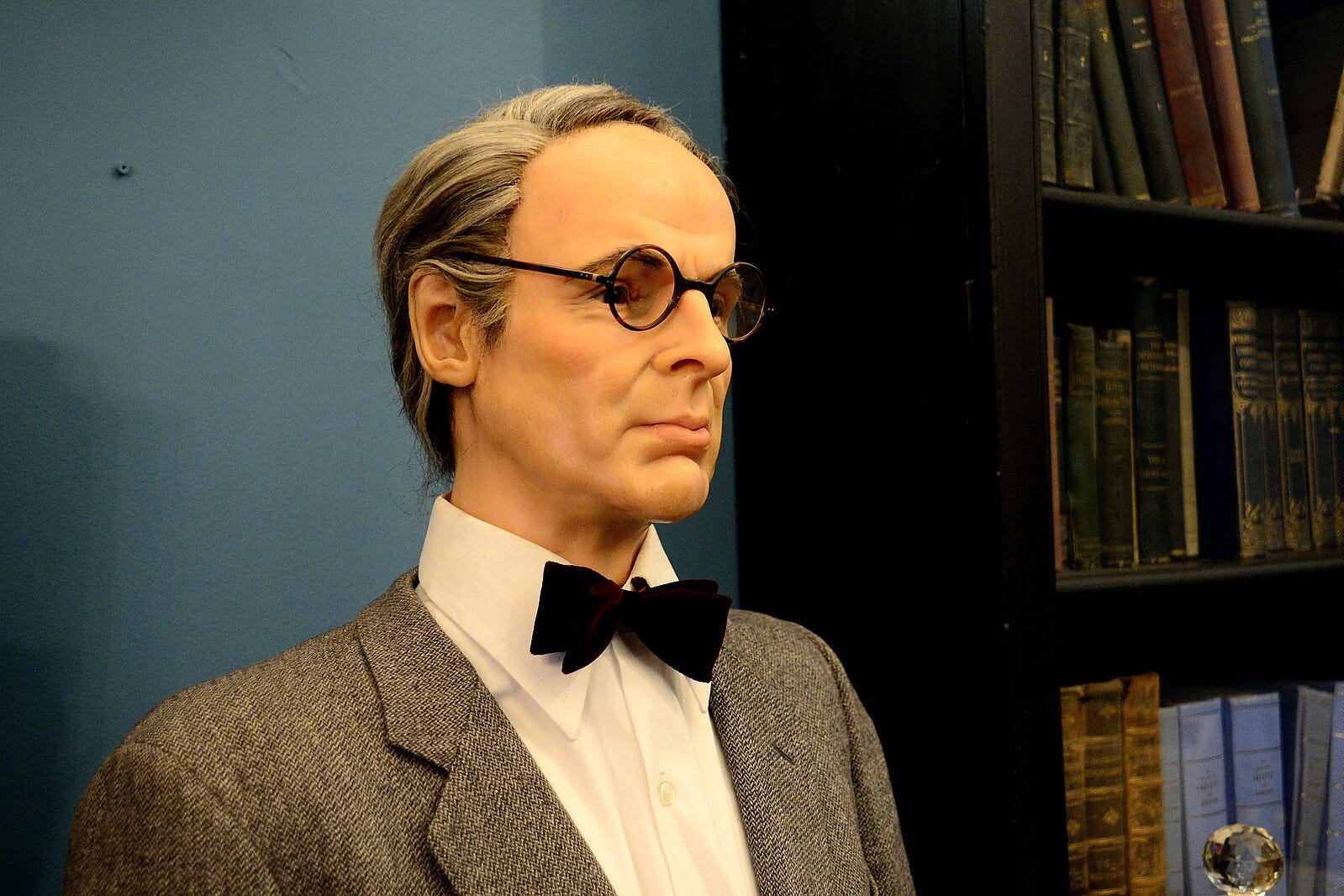
A couple of years ago, in a quixotic effort to shore up my senescent mind, I decided to try committing a few classic poems to memory. Among them was “The Second Coming” by William Butler Yeats.
Even if you’ve never read it (if not, do it here) you’ve undoubtedly encountered fragments of the poem. Chinua Achebe borrowed its grim declaration “Things fall apart” for the title of his 1958 book about British colonialism in Nigeria. More inspired by Achebe than Yeats, The Roots used the same line for a 1999 album title. Joan Didion’s Slouching Towards Bethlehem echoes the poem’s famous final lines.
The enduring appeal of “The Second Coming” owes much to Yeats’ skill as a poet. But its stickiness also has to do with its subject matter. It describes a world on the edge of apocalyptic upheaval; a place where order has unraveled, institutions are crumbling, innocence has been usurped by violence.
In short, it has a timeless sort of relevance.
Yeats wrote “The Second Coming” on the heels of the First World War. Twenty million had died and Europe was in rubble, but Yeats sensed still more convulsions ahead. Fascism was percolating in Italy. A communist revolution was roiling Russia. And in his homeland of Ireland, a series of assassinations had ushered in a War of Independence with colonial England.
When I was a child, a vast sea of time seemed to separate World Wars I and II. Now I know that those two wars were less distinct events than sequential parts of a single calamity. Based on “The Second Coming,” Yeats knew the end of World War I was merely an intermission. The poem’s second stanza foretells a dark prophecy draped in mythic symbolism:
A shape with lion body and the head of a man,
A gaze blank and pitiless as the sun,
Is moving its slow thighs, while all about it
Reel shadows of the indignant desert birds.
The darkness drops again; but now I know
That twenty centuries of stony sleep
Were vexed to nightmare by a rocking cradle
That nightmare took the form of another world war—one that killed nearly five percent of the population and ended with two unearthly flashes that incinerated 100,000 people instantly.
Certainly Yeats’ “rough beast” wasn’t meant as a symbol for the hydrogen bomb, but that interpretation maps onto the poem rather strikingly in retrospect. Just as Yeats foresaw a monstrous birth, Robert Oppenheimer saw the atomic bomb as a monster born of his heedless scientific efforts. Quoting the Bhagavad Gita after the first test detonation (which was called “Trinity” and took place in the American desert), Oppenheimer said: “Now I am become Death, the destroyer of worlds.”
In the Bhagavad Gita, Krishna is a creator-destroyer who recreates the world eternally. Yeats, who fashioned his own personal cosmology from Eastern religions, mystical Christianity, Theosophy, and astrology, believed in a similar cycle where the world undergoes collapse and transformation on an everlasting loop. Surveying the world in 1919, he felt that we were on the cusp of such a collapse. He wasn’t entirely wrong.
“The Second Coming” remains popular a century later partly because it’s a uniquely masterful poem. But its staying power has even more to do, I think, with how each generation sees itself in its story of societal collapse. But we should also see in it a chance to gain something all too rare in this doom-obsessed moment: perspective.
I won’t deny that we live in dark and mystifying times. Every week offers up a new reason to post the dog-in-the-burning-house meme. But Yeats’ poem is a reminder that, in his time, that dog’s life would have been bookended by two World Wars. And if the bombs didn’t kill him, he would have been working 15-hour shifts at the factory and living in tenement housing without safe drinking water. Things are bad now, but they are better, in nearly every way, than they were a century ago.
I believe that, and still I can’t fault anyone for seeing grim parallels between “The Second Coming” and the current American moment. There is a sense of escalating tension. The culture war that has festered for the past 40 years seems to inch closer to actual war with each new act of political violence. And nothing captures the state of public discourse—much of it online—quite so well as Yeats’ famous line: “The best lack all conviction while the worst are full of passionate intensity.”
The apocalypse isn’t nigh, not yet. But a new beast, one for our epoch, is gestating. At such a time, one could do worse than attend to poems rather than punditry. May I suggest this one by W.H. Auden. A dirge lamenting the start of World War II, it includes these instructive lines:
All I have is a voice
To undo the folded lie,
The romantic lie in the brain
Of the sensual man-in-the-street
And the lie of Authority
Whose buildings grope the sky:
There is no such thing as the State
And no one exists alone;
Hunger allows no choice
To the citizen or the police;
We must love one another or die.
I and the public know
What all schoolchildren learn,
Those to whom evil is done
Do evil in return.